How the face shape test decides, from a photo
The LOOKSMAXBRO face shape test decides from four lines it draws on your photo: face length from the top of the forehead to the point of the chin, forehead width at the temples, cheekbone width at the widest point of the face, and jaw width at the corner of the jaw.
Those four lengths become four ratios — length against cheekbone width, jaw against cheekbones, forehead against jaw, forehead against cheekbones — plus one angle: how sharply the contour turns at the corner of the jaw, which is what separates a square jaw from a round one at the same width. The shape with the best fit wins, and the ratio that carried the win is printed as the reason.
Before any of that, the landmarks are levelled, so a photo taken with a tilted camera measures the same as a straight one. Two things the levelling cannot fix: a head turned away from the lens, which the tool refuses outright past a point, and a chin lifted or dropped, which shortens or lengthens the face on the photo without changing the face. Camera at eye level, chin level.
A face shape is a band, not a fact. Most faces sit between two of the seven, and when the runner-up is close the result says which one it was — that is honest, and it is also why two photos of the same person can land on two different words.
The seven face shapes and how to read yours, oval vs oblong included
The seven face shapes this test names are oval, round, square, oblong, heart, diamond and triangle, and each word is a description of which line is widest and how long the face is — not a rank.
- Oval — Cheekbones widest, jaw a little narrower, and a touch longer than it is wide. The one confused with oblong: an oval is longer than it is wide, but not by much.
- Round — About as wide as it is long, with a jaw that curves instead of turning a corner. Told apart from square by the jaw — same length, but a round jaw curves where a square one turns.
- Square — A jaw nearly as wide as the cheekbones, with a corner in it rather than a curve. Told apart from round by that same corner, and from oblong by length: a square face is not a long one.
- Oblong — Clearly longer than it is wide, with forehead, cheekbones and jaw close to one width. The long version of an oval — the same three widths, more distance from hairline to chin.
- Heart — A wide forehead over a narrower jaw, tapering toward the chin. Told apart from diamond by the forehead: a heart keeps its width up top, a diamond does not.
- Diamond — Cheekbones are the widest line, with both the forehead and the jaw inside it. Told apart from heart at the temples: on a diamond, forehead and jaw both sit inside the cheekbone line.
- Triangle — A narrow forehead over a jaw that carries the width. The upside-down heart — the width sits at the jaw instead of the forehead.
Oval vs oblong is the closest call on the list, and it comes down to one number: length against width. Both have a forehead, cheekbones and jaw of roughly one width, both have a jaw that curves rather than turns — an oblong face is simply the longer one. If your result names the other as runner-up, you are on that line, and both words describe you.
Face shape for men: haircut and beard
Face shape for men decides two practical things — how much height and volume a haircut should add on top, and where a beard should be shortest — and neither one makes a shape better or worse than another.
- Oval — Most cuts sit well; the usual advice is to keep the forehead visible rather than covering it with a heavy fringe.
- Round — Height on top with shorter sides adds length, and a beard left longer at the chin than at the cheeks does the same.
- Square — The jaw is already the feature — barbers usually soften the sides instead of squaring them further, and a short even beard follows the jaw line.
- Oblong — Width at the sides rather than height on top; fuller cheeks on a beard and a shorter chin keep the length in check.
- Heart — A softer, fuller front takes width off the forehead, and beard growth along the jaw fills out a narrow chin.
- Diamond — Volume at the forehead and along the jaw is the usual aim, since the cheekbones already have the width.
- Triangle — Volume on top balances a wide jaw, and keeping the beard short on the sides leaves the width where it is.
None of this makes a face better or worse, and none of it is surgery: LOOKSMAXBRO does not cover implants, fillers or “bone smashing”, and no haircut moves the bone underneath.
Face shape for glasses: frames that fit
Face shape for glasses comes down to one rule of thumb opticians start from: a frame that contrasts with the outline of your face is easier to wear than one that repeats it, so angular frames tend to suit a round face and softer, rounder ones tend to suit a square jaw.
An oval face carries most frame shapes, a heart shape usually takes a lighter top rim so the width sits lower on the face, and a diamond or triangle is the case where the frame is asked to add width where the face has least of it.
Two measurements matter more than the shape word: the frame should be about as wide as your face at the temples, and your eyes should sit near the middle of the lenses rather than high in them.
If the LOOKSMAXBRO face shape test named a runner-up shape, both sets of advice apply to you — the gap between the two words is smaller than the difference between a frame that fits your temples and one that does not.
None of this is a medical claim or a recommendation of any brand, and no frame changes the face behind it. Try the shape on before you believe the rule.
What actually changes how your face shape reads
What changes how your face shape reads is soft tissue, not bone: morning fluid, body-fat level and where your head sits on your neck all move the widths this test measures, while the skull underneath stays where it is.
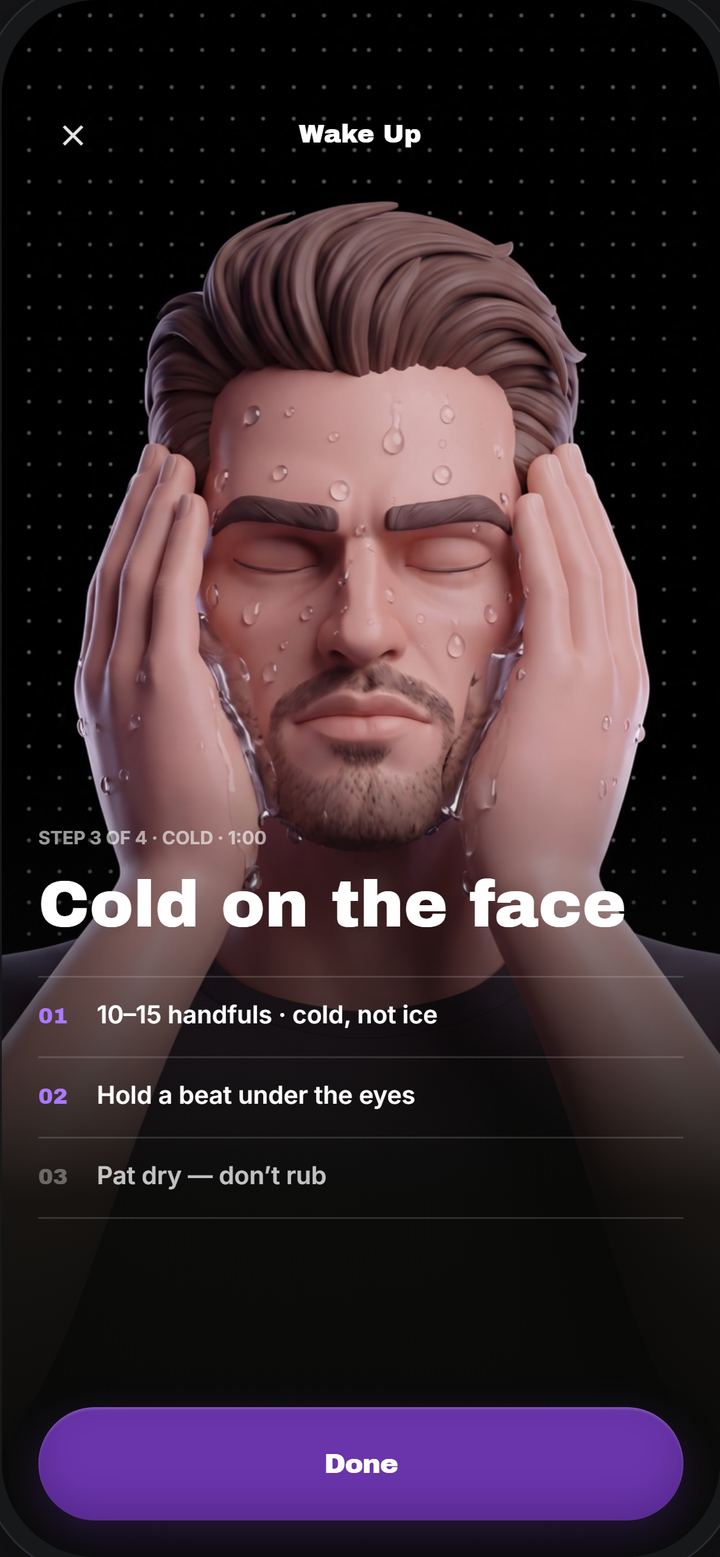
- Wake Up — Cold water on the face and a glass of water on waking cut the morning fluid that widens the cheeks and softens the jaw line. weak
- Massage AM — A few minutes of drainage strokes move the same fluid off the jaw corner and under the eyes. weak
- Steps — Body-fat level is the one thing on this list that changes how much width the cheeks and jaw carry over months rather than hours. moderate
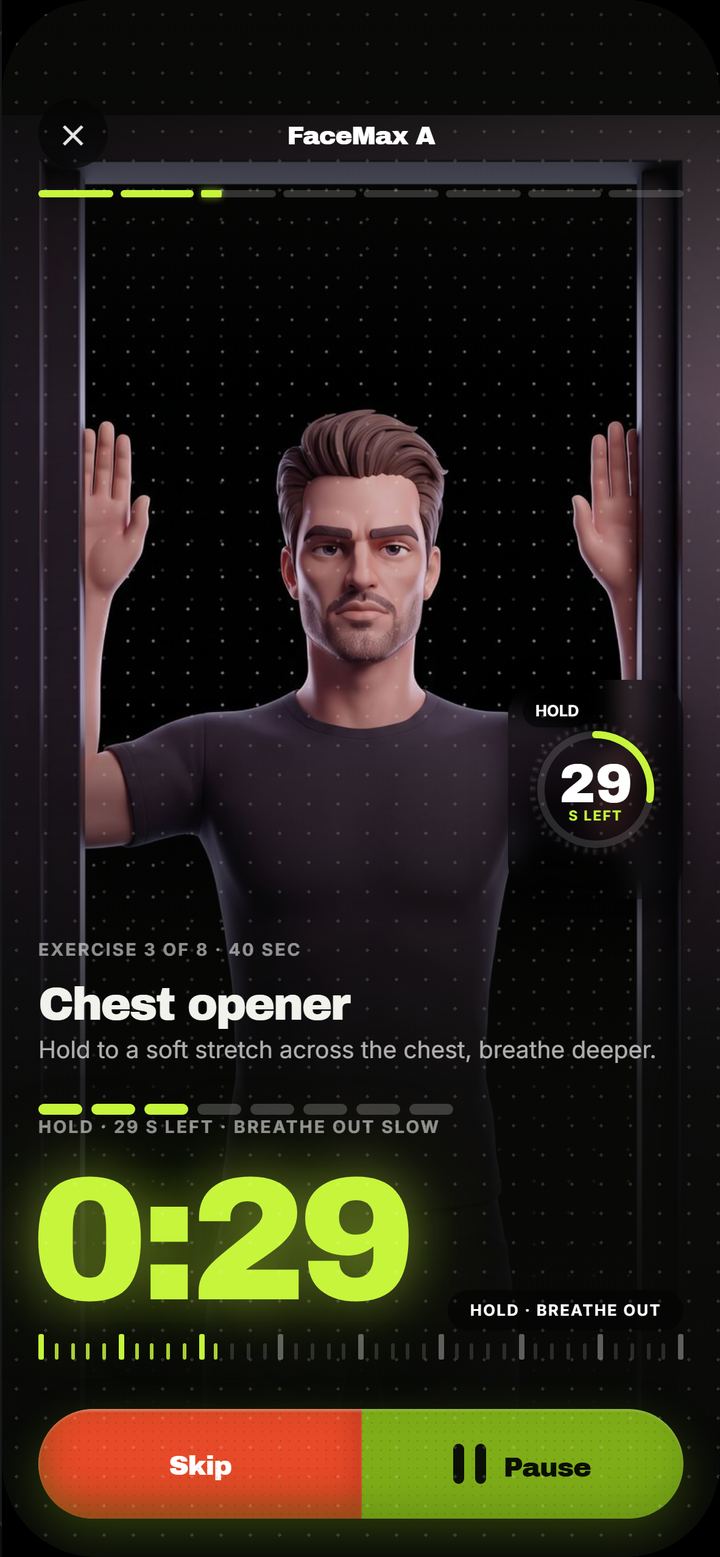
- FrameMax — A head that sits forward shortens the neck in a photo and blurs the line between jaw and neck; posture work changes what the camera sees. moderate
Out of scope, and staying that way: jaw implants, fillers, “bone smashing” and jaw-training gadgets. The bone under your face is the shape it is, and this test measures the photo, not the plan.