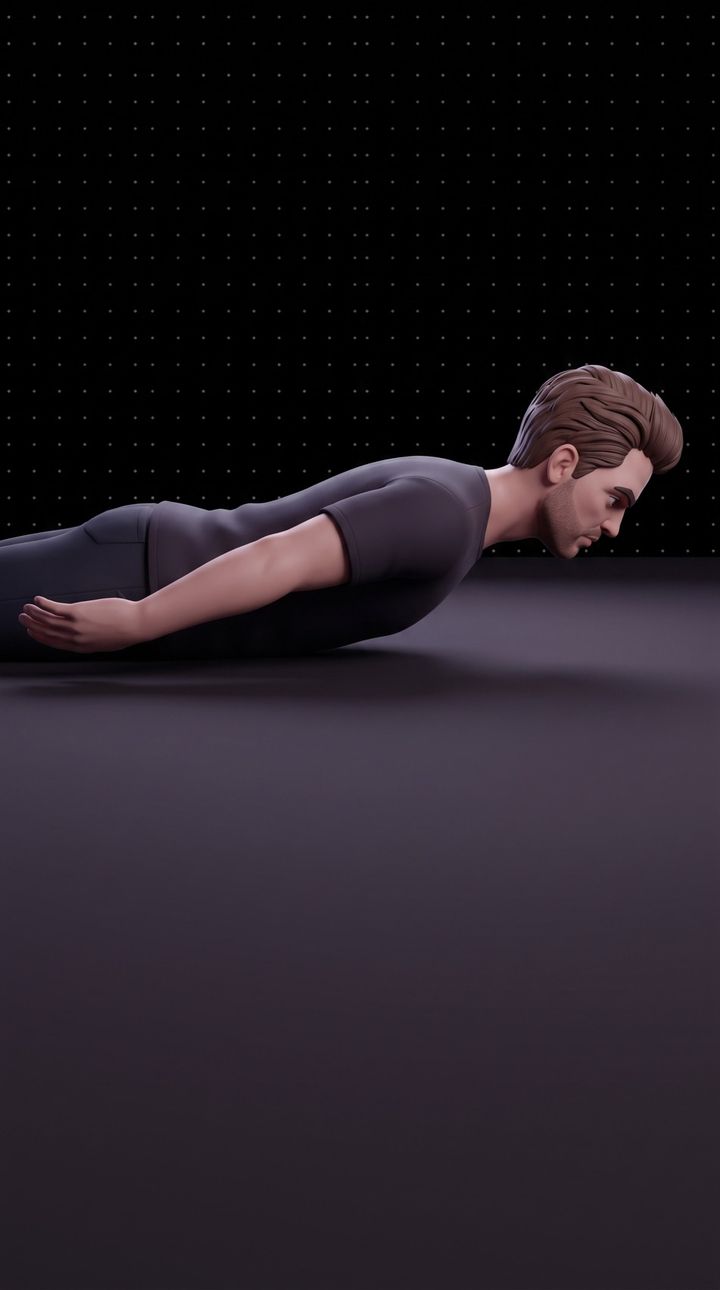
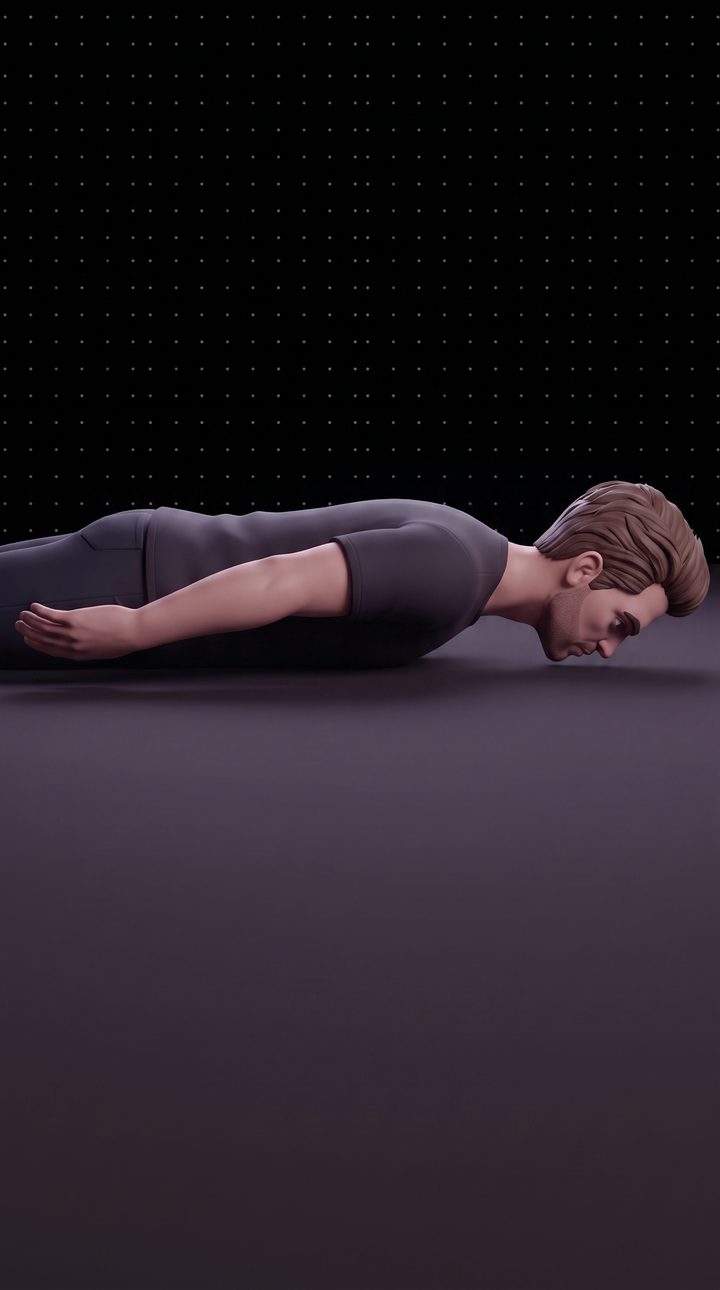
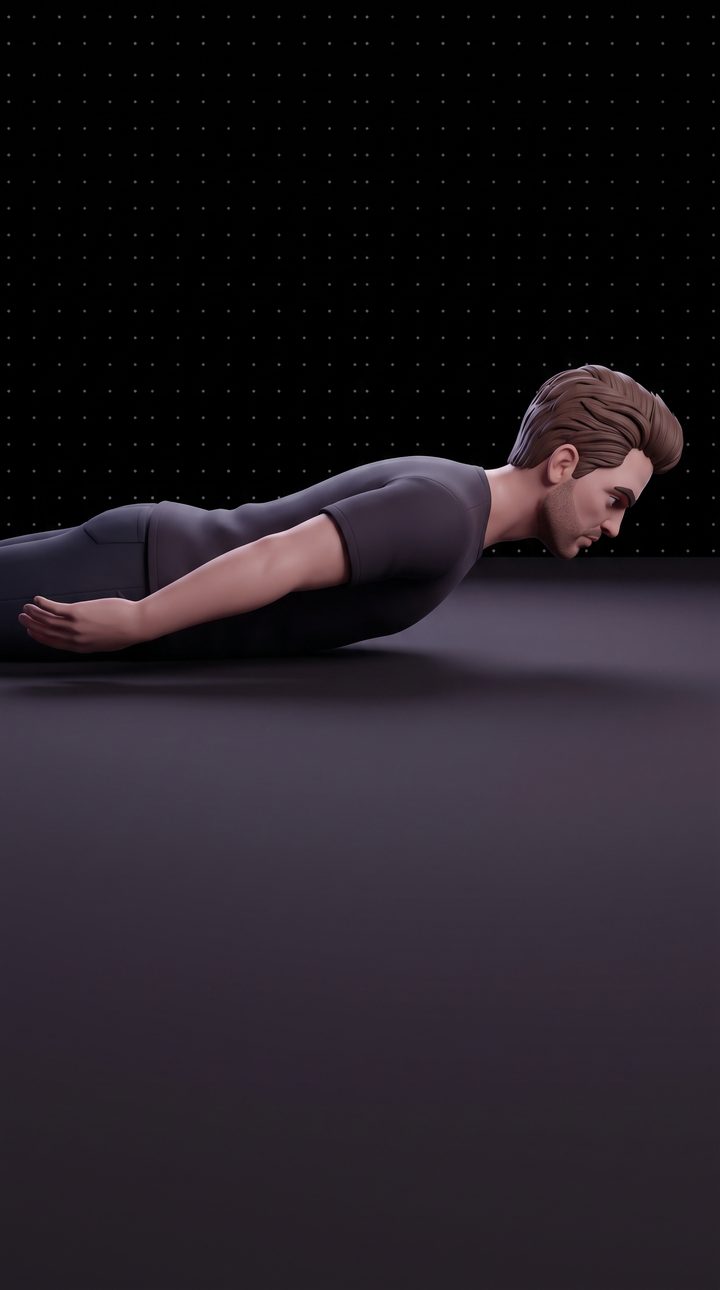
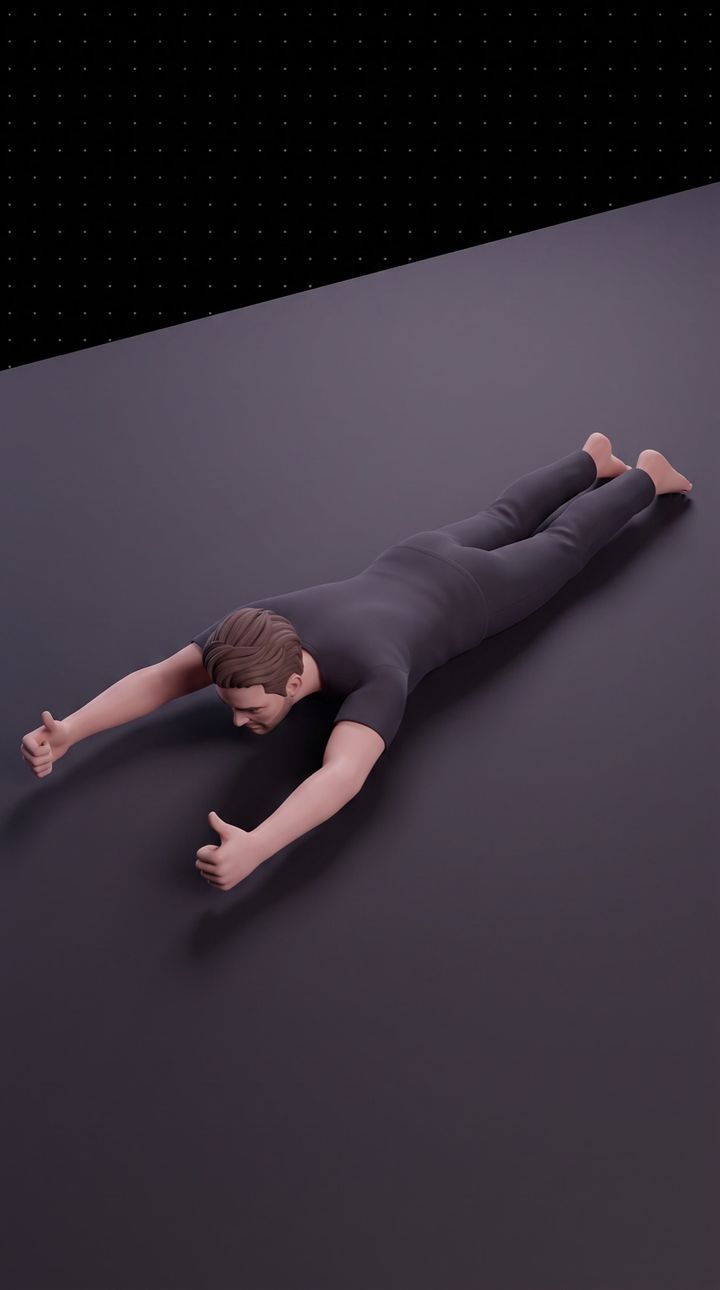
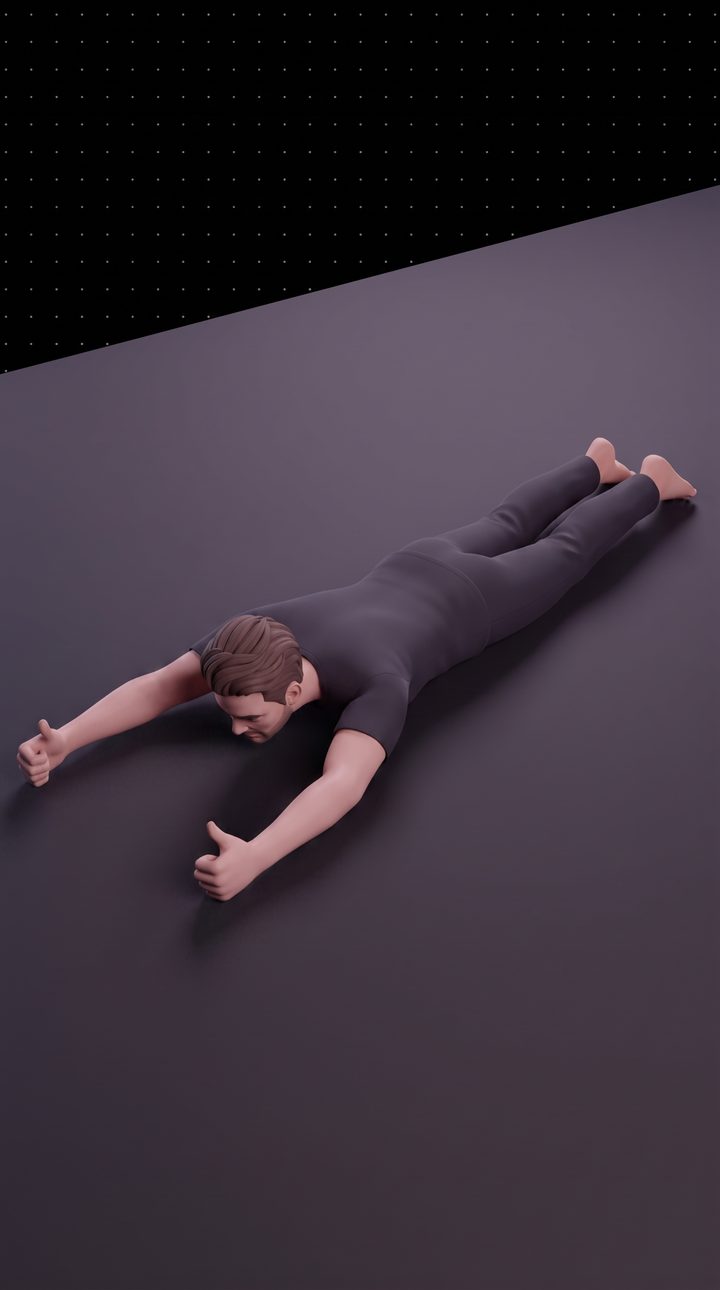
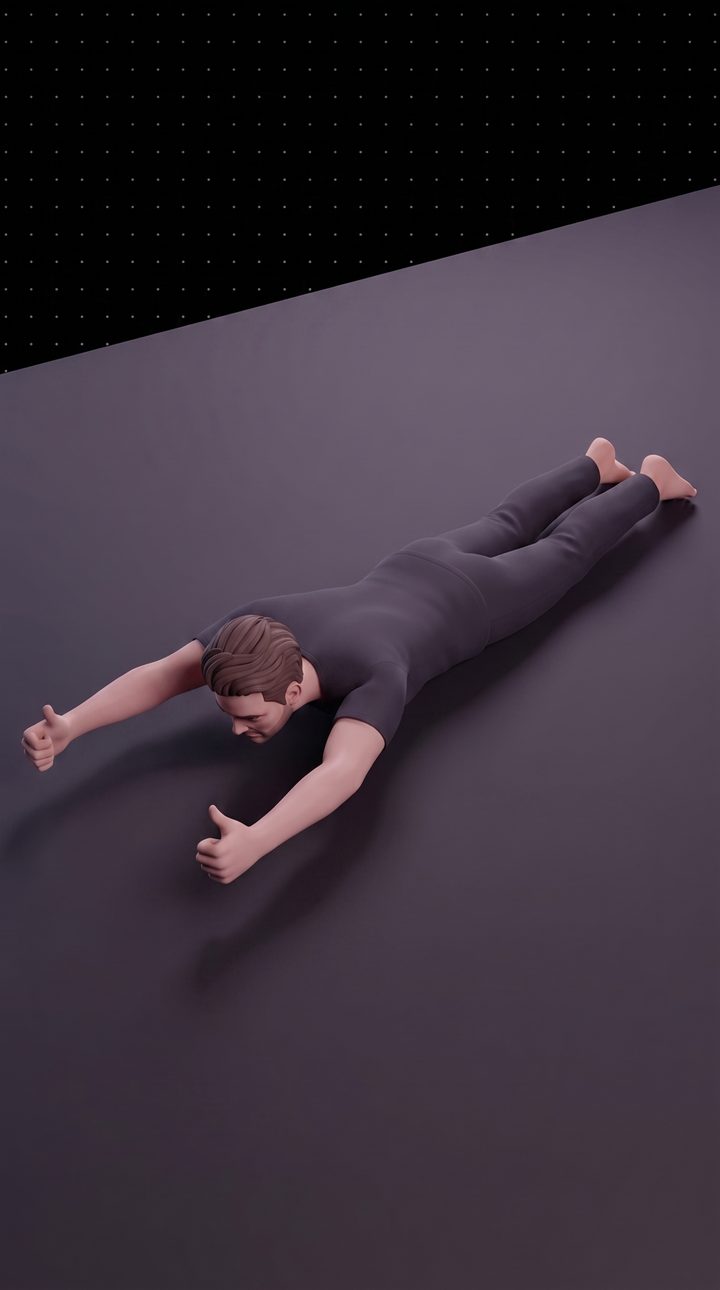
The lesson, move by move
+ 7 more moves in the app
⚠ = JOINT MOVE
That is one pass through the block. It opens with the two moves that play here, Prone extension and Prone Y raise, both face down: they wake the back and the lower traps. The seven that stay in the app go on to the trunk — four moves that teach it to hold itself still while the limbs move — and then upright, to the front of the neck and to carrying the corrected position off the floor. Six of the nine are on the floor and three are upright; three of them load a joint.
What these posture exercises train, from forward head to rounded shoulders
These posture exercises train the muscles that lose an argument with a chair: the back extensors and the lower trapezius that pull the shoulder blades down and back against rounded shoulders, the deep neck flexors that fade as the head drifts forward, the trunk and glutes that stack the ribs over the pelvis, and the levator scapulae, which shortens from a day of looking down and needs its length back rather than more load.
A slouch is a habit before it is a weakness, which is why the block does not stay on the floor. The last three moves are upright on purpose — the point is not to be strong lying down, it is to find the same position again at a desk two hours later.
Here is everything that moves the way you stand — this lesson’s own work first — each row carrying the grade the LOOKSMAXBRO habit catalog gives it.
- Back and lower-trap work — Prone extension and Prone Y raise, the two that play here moderate LOOKSMAXBRO grades posture drills B, which this page prints as moderate: the studied neck and upper-back programs move a forward head by a few degrees over four to eight weeks, not overnight and not by a lot.
- Deep neck flexors, and the length a day of looking down takes — the upright three moderate Isometric work loads the front of the neck, which almost nothing else in a day does, and a held stretch gives back the length. Same grade, same honest ceiling: this is the angle the head is carried at, not the shape of anything.
- Trunk and glutes — the four moves in the middle of the block moderate A bodyweight circuit is graded B in the catalog. The head cannot sit back over shoulders that sit on a pelvis nothing is holding, which is why four of the nine moves never touch the neck at all.
- Strength training — the thing that actually changes a frame strong The strongest-graded row on this page is not this lesson. Strength work is the only A here, and shoulders and a back that have been trained change a silhouette far more than any amount of holding still does.
- Getting up: neck and shoulder breaks, and daily steps moderate Both are B in the catalog. Nine minutes of exercise against eight hours of sitting is an argument the sitting usually wins, and standing up a few times a day is the cheapest way to change the odds.
- The desk itself — screen at eye level, elbows at 90° moderate Also B, and the only row on this list that removes the cause instead of training against it. A monitor raised to eye level and a phone lifted rather than looked down at take away the reason the head goes forward in the first place.
- Posture braces and “posture correctors” A brace holds your shoulders where it wants them for as long as you wear it, and the muscles that have to hold that position learn nothing meanwhile. The evidence is weak and the effect leaves with the brace — useful as a reminder at most.
- Surgery for a “neck hump”, and anything sold as moving bone out of scope Out of scope here and in the app. LOOKSMAXBRO trains muscles and habits; a fatty or bony hump at the base of the neck is a question for a doctor, not for a lesson.
Every grade here is the app’s own, out of the habit catalog LOOKSMAXBRO builds its plans from, so nothing promises more than the evidence behind it, and a row with no chip beside it is one the catalog grades nothing at all. Height is the claim to be most careful with: standing tall gives back the centimeter or two a slouch was costing you, and no exercise adds any beyond that.
How long to fix posture, and can you do posture exercises every day?
Fixing posture takes weeks rather than days — the neck and upper-back programs that have been studied run four to eight weeks of daily work and move a forward head by a few degrees — and yes, posture exercises are safe to do every day, which is the dose FrameMax is built for. Nine moves, no equipment, no rest day: a position is learned from rhythm rather than from effort, and one hard session a week teaches a body nothing about how to sit on a Tuesday.
The app puts the lesson on the day plan with no window attached, unlike the morning lessons — any hour is the right hour, and the useful trigger is usually the desk you are trying to undo. It counts the session either way.
Watch it with a photograph rather than a feeling: shoot the same side-on photo every four weeks from the same distance and height, run it through the free forward head posture check on this site, and compare the angle from your shoulder up to your ear. A few degrees over a month is what progress actually looks like. Skip the day if a move produces sharp pain, and treat numbness or pins and needles down an arm as a reason to see a physical therapist rather than to train harder.
- Acute infection or fever
- Skin inflammation on the face or neck
- Thrombosis, heart failure
- Cancer, diagnosed lymphedema
- Back or neck pain that is new, sharp, or getting worse
- Numbness, pins and needles or weakness running down an arm
Dizziness, sharp pain or a click in the joint — stop. Nothing here should hurt. A shoulder that hurts under load and a neck stretch that sends pain or dizziness down the arm are both a stop for the day, not something to breathe through — and numbness, weakness or headaches that keep coming back are a physical therapist’s question rather than a lesson’s.
The marked moves load a joint — the lower back in Prone extension, which opens the lesson, and then a shoulder and the neck later in the block. Stay inside a range that moves freely and never force it: sharp pain, or anything running down an arm, means stop for the day.