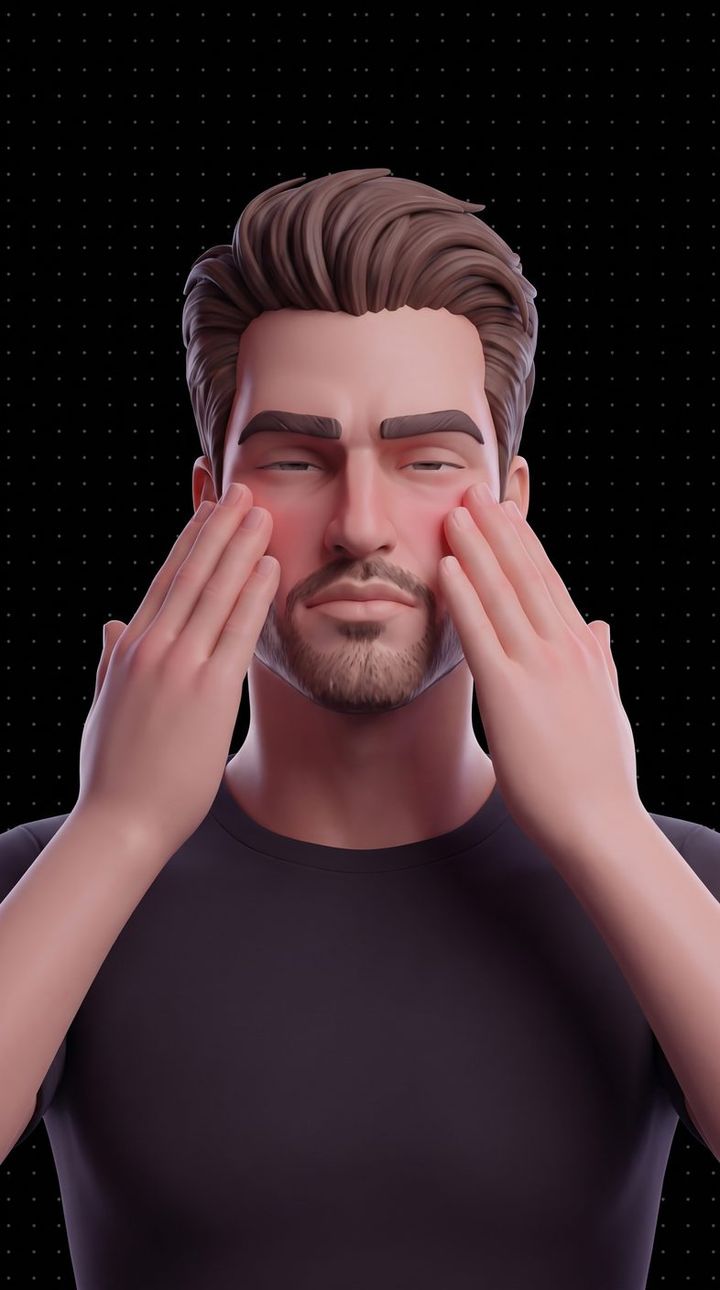
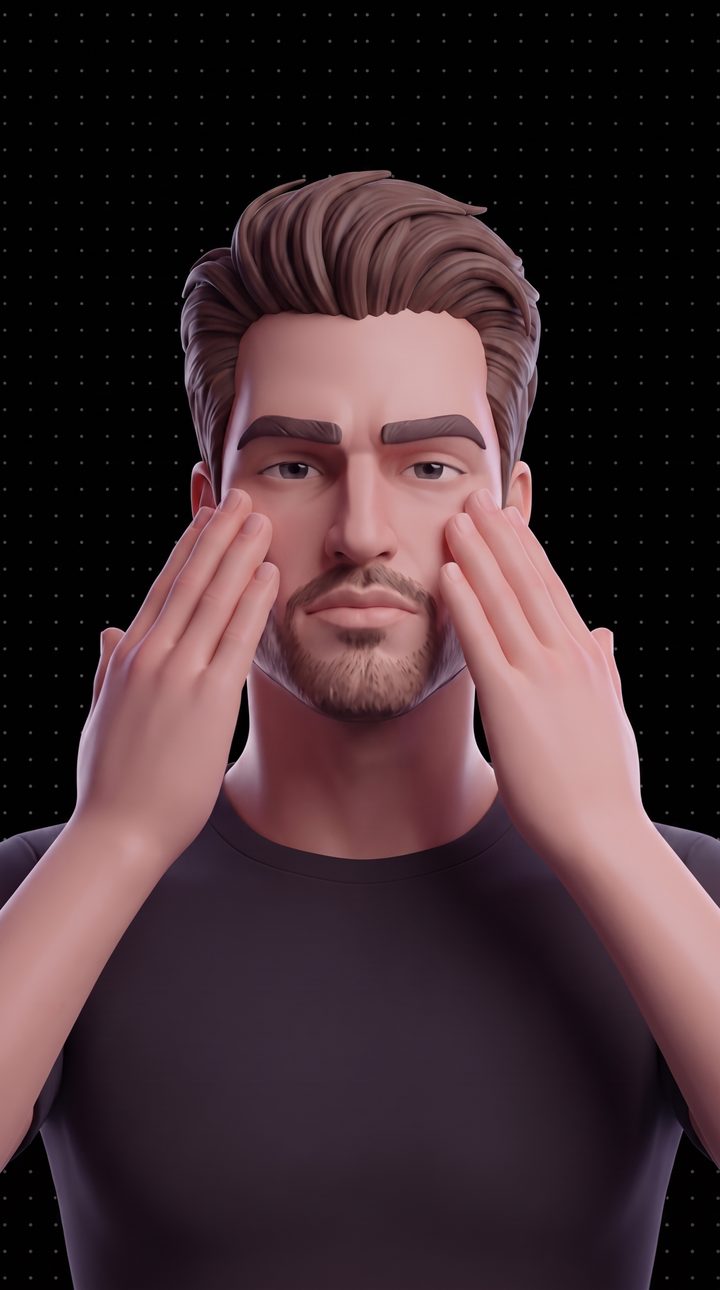
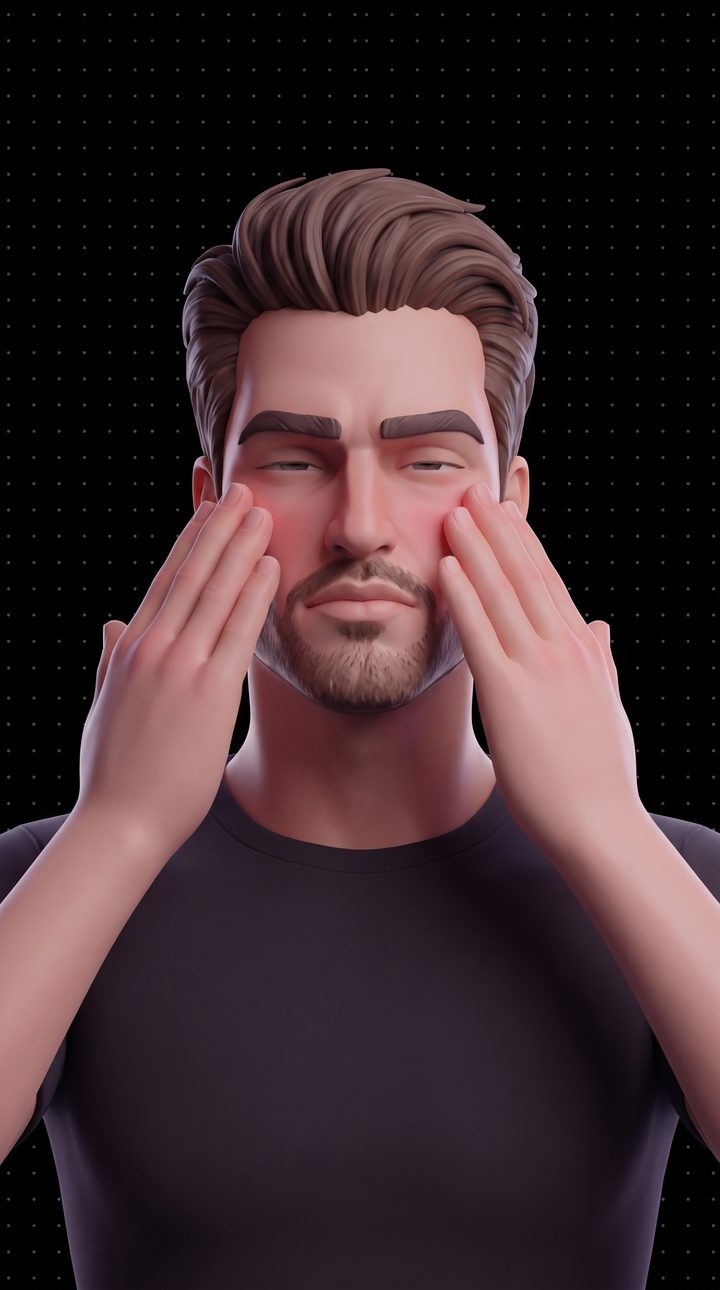
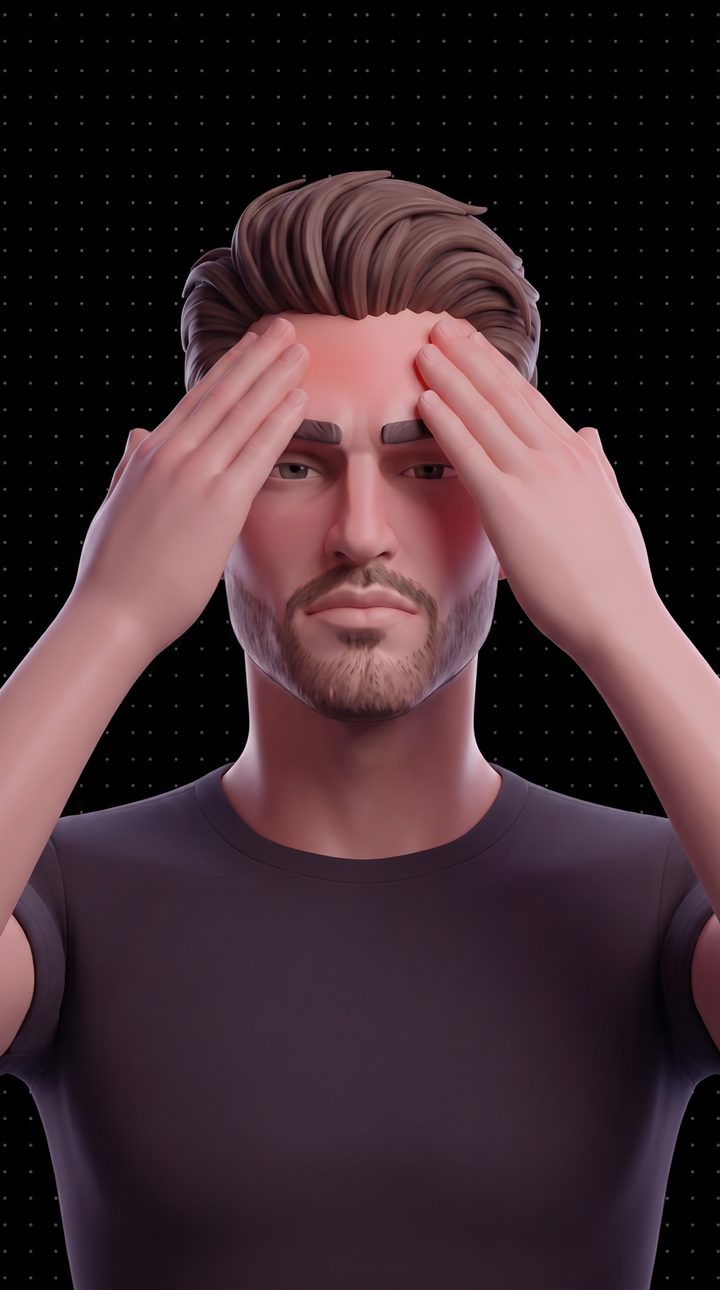
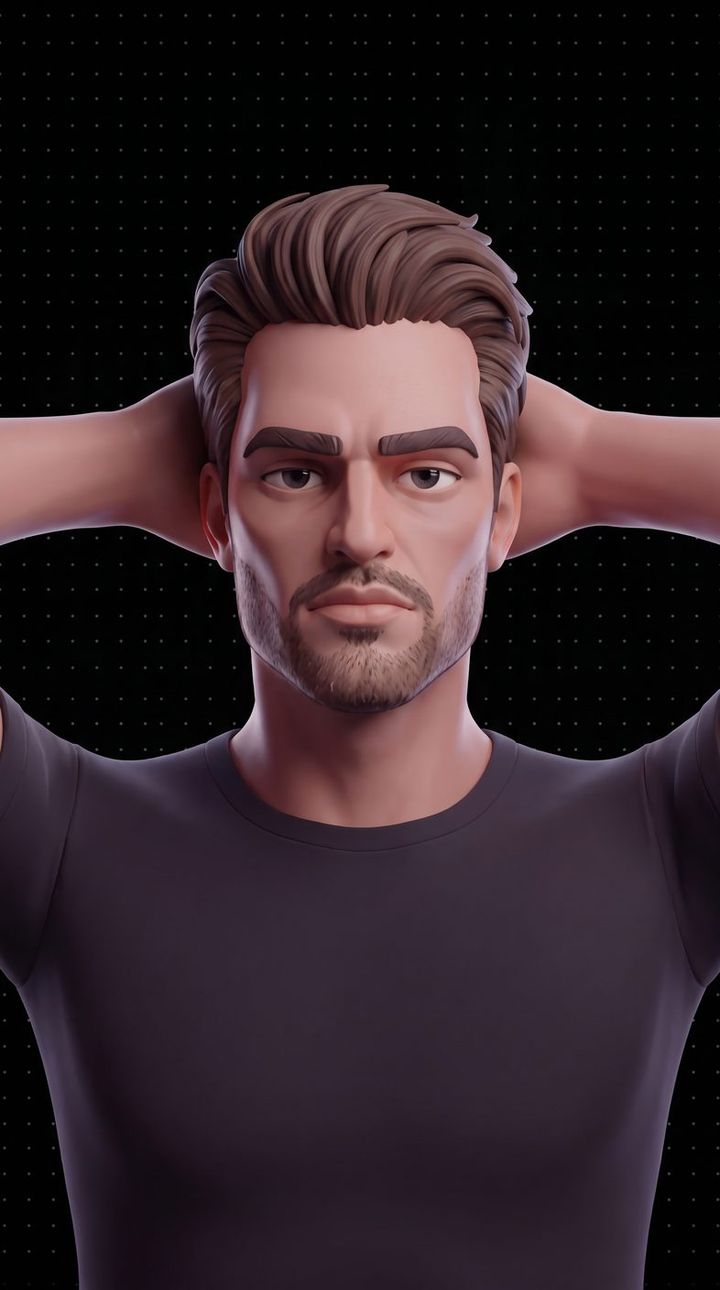
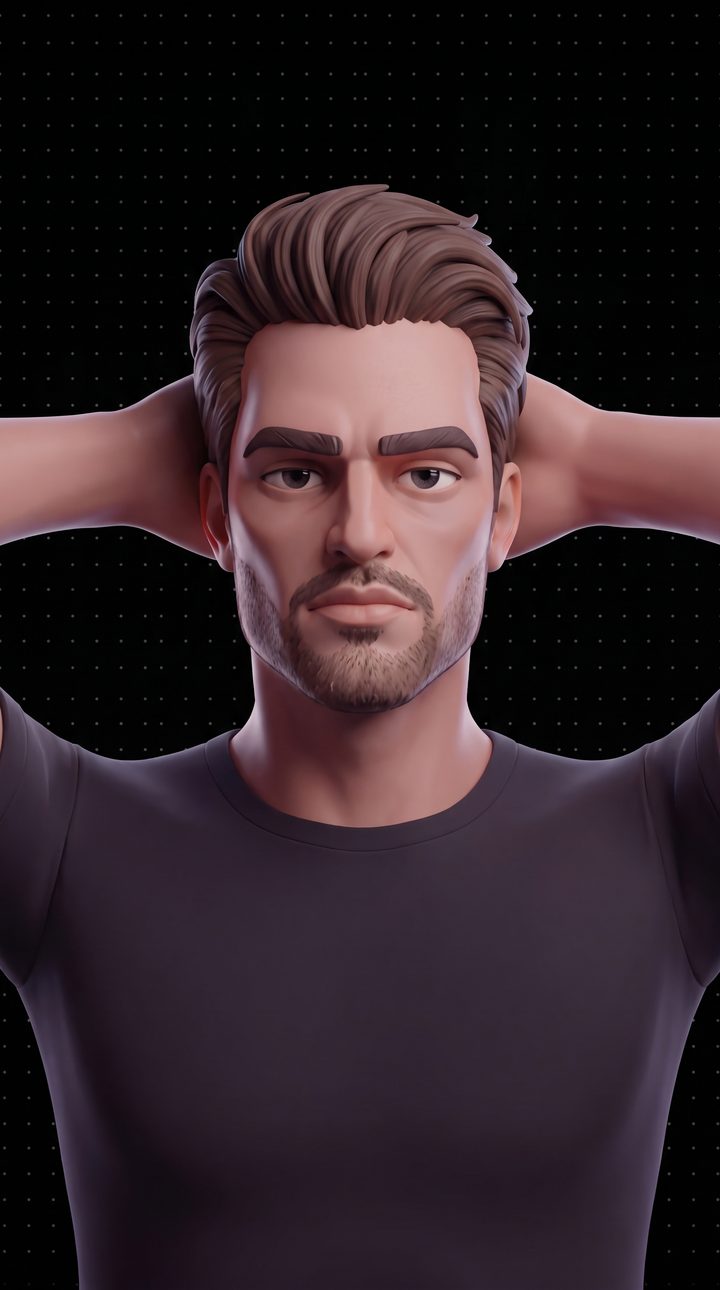
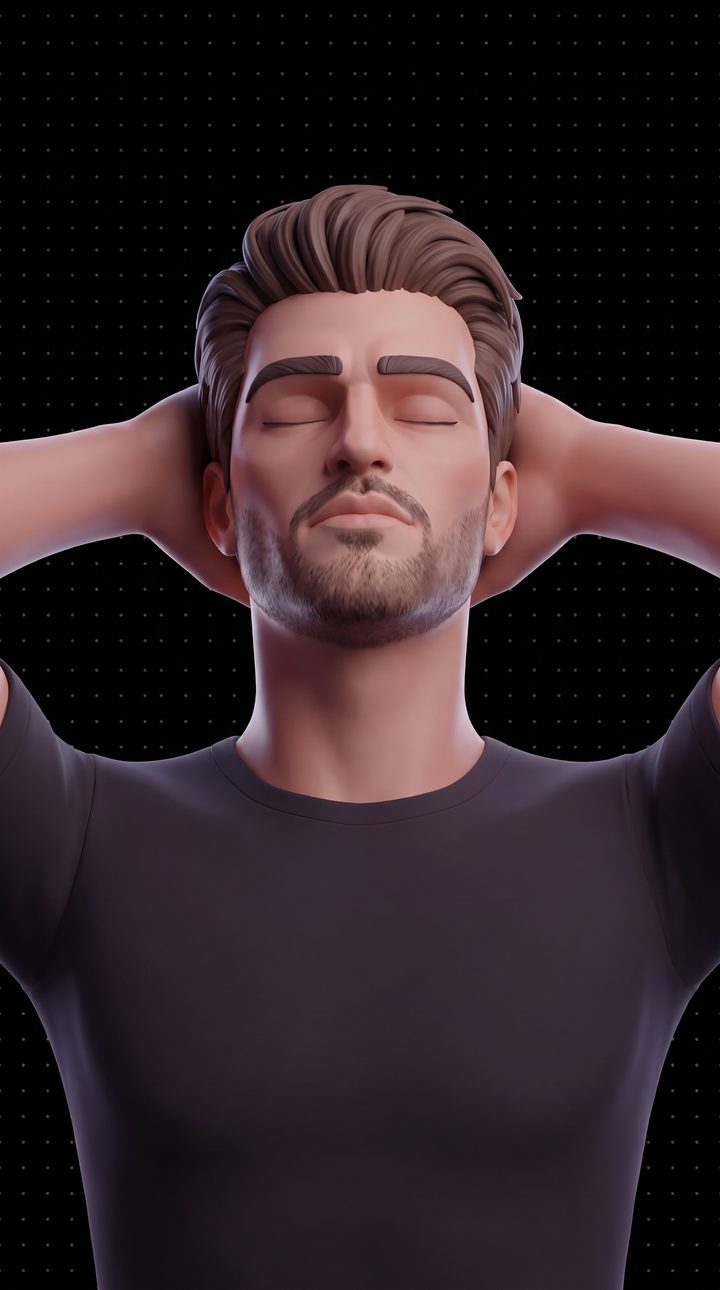
The lesson, move by move
That is one pass through the block, in the order the app’s own briefing sets out, and the rule of that order is movement before holds. The two that play here open it: “Face warm-up rub” warms the face, then “Neck press back” loads the muscles that hold the head up. The five that stay in the app carry on through the side of the neck, the ring around the mouth and the cheeks — full range first, then held. Not one of the seven loads a joint.
Do face exercises work? What face exercises for men actually train
Face exercises work on muscle and on nothing else: this block warms the face, loads the muscles that hold the head from behind and from the side, takes the ring around the mouth through its full stretch, and works the cheek muscle at both ends of its range. The evidence that any of that visibly changes a face is weak, and the LOOKSMAXBRO habit catalog grades this work C for exactly that reason.
A cheek is read through four layers stacked on each other: the bone under it, the fat over the bone, the fluid in the tissue on the day, and the thin sheet of muscle between them. An exercise touches the last one only, which is why facial exercises for cheeks cannot hollow a full face and why nothing here takes fat off one region on request. It is also why two of the seven moves are neck work rather than face work.
Here is everything that changes how a cheek reads — this lesson’s own work first — each row carrying the grade the LOOKSMAXBRO habit catalog gives it.
- Face-muscle work — the cheek holds, the mouth stretches and the neck presses of this block weak LOOKSMAXBRO grades face exercises C, which this page prints as weak: small, slow gains in tone at best, over months rather than weeks. The habit card that schedules them says the same thing inside the app — a short set every other day, no reshaping of bone, and no substitute for the basics.
- Posture — how the head sits over the shoulders moderate The best-graded work inside this block is not the face work. Two of the seven moves load the muscles that hold the head up — “Neck press back”, which plays free in this tab, and one more behind it — and a head that sits over the shoulders instead of in front of them changes the angle every line of the face is seen at, on the same day.
- Body-fat level — strength work and cardio strong The strongest-graded habits in the catalog have nothing to do with the face: the gym and the cardio session are the two rows LOOKSMAXBRO grades A. How much fat sits over a cheekbone follows the whole body and moves over months, and the face is simply where most people notice it first. What is on the plate belongs to the same answer one grade lower — protein and veg at meals is a B.
- Sleep strong Overnight fluid is why a face reads fuller at 8 a.m. than at 8 p.m. It is the fastest-moving thing on this list, it answers to what you did the evening before, and it is the change most often mistaken for an exercise working.
- Morning drainage — a cool rinse, water and a few light strokes weak A few minutes of light drainage moves the overnight puffiness out sooner than waiting does. The effect is real, modest and gone again by evening — Massage AM and Wake Up in the app.
- The bone under the cheek The arch you are trying to see is bone: its width and height were set before you finished growing, and nothing in this lesson moves it. LOOKSMAXBRO does not claim otherwise, and neither chewing devices nor forceful pressing on the face move it either.
- Face exercises for burning cheek fat Spot reduction has never been demonstrated anywhere on the body, the face included — working a muscle does not spend the fat lying on top of it. The catalog grades face exercises for tone and for nothing else, which is why this row carries no chip at all.
- Buccal fat removal, fillers and thread lifts out of scope LOOKSMAXBRO does not teach, plan or recommend surgery or injections, here or in the app, and none of this is a diagnosis. The buccal pad does not grow back once it is out and a face keeps losing volume with age on its own, which makes it a surgeon’s conversation and a permanent one.
Every grade here is the app’s own, out of the habit catalog LOOKSMAXBRO builds its day plans from, so nothing on this page promises more than the evidence behind it — and a row with no chip beside it is one the catalog grades nothing at all.
How often to do face exercises, and how long until results
Face exercises answer to frequency rather than to effort, and what they give arrives over months rather than weeks — which is exactly why the catalog grades this work C, printed here as weak, instead of showing you a before-and-after. FaceMax C is built to be done often: the app’s own briefing calls six minutes a day the dose, on the principle that small muscles hold tone through frequency and lose it on one long session.
The LOOKSMAXBRO plan is more conservative than the briefing. It puts the face block on the day plan every other day, and the habit card behind it promises only small, slow gains in tone. Nothing in the block is heavy enough to need a rest day — the gap is how the catalog paces face work, not a safety limit — and the app suggests the morning, between 8:00 and 13:00, because the fluid you slept on is part of what you are looking at. It counts the session either way.
What changes inside a week is not the muscle. Puffiness moves overnight and head position changes the angle on the first day you stop parking your head in front of your shoulders; both sit higher in the graded list above than the face work does, and both are usually what people mean when they say the exercises worked.
Are face exercises safe, and when to stop
Face exercises are safe for most people as long as the effort stays moderate and nothing is forced: every move in FaceMax C is made by muscle, none of them presses, pulls or drags on the skin of the face, and not one of the seven loads a joint. Keep the shoulders down, keep the jaw loose through the mouth moves, and stop the moment something hurts — nothing in this lesson should.
Two things are worth naming. The neck work in this block is isometric — the head is held still against your own hands, and pressing harder does not make it work better, it only loads a neck. And pain, clicking or locking in the jaw joint is not something to train through and not something an app can assess — stop the session and take that one to a dentist or a doctor.
None of this is a diagnosis and none of it is treatment. LOOKSMAXBRO does not do surgery, injections or anything that works by force on a face, and the states that call for skipping a session entirely are the four LOOKSMAXBRO lists in the app’s own words just below.
Where the cheeks get measured, and what to read next
Nothing on this page measures anything: the lesson is a block of work, and the number that says whether a cheek is reading differently comes from a photo. Two free browser tools take that photo, read it on your own device and upload nothing, and the cheeks hub collects everything that moves the zone in one graded place.
- Cheeks What actually changes how full a face reads — body fat, sleep, fluid and bone, every row graded.
- Face shape test Four widths from one front photo, and the closest of seven shapes with the ratio that decided it.
- Face symmetry test How closely the two halves of a face mirror each other, region by region, from one photo.
Terms on this page
- Acute infection or fever
- Skin inflammation on the face or neck
- Thrombosis, heart failure
- Cancer, diagnosed lymphedema
Dizziness, sharp pain or a click in the joint — stop. Nothing here should hurt.