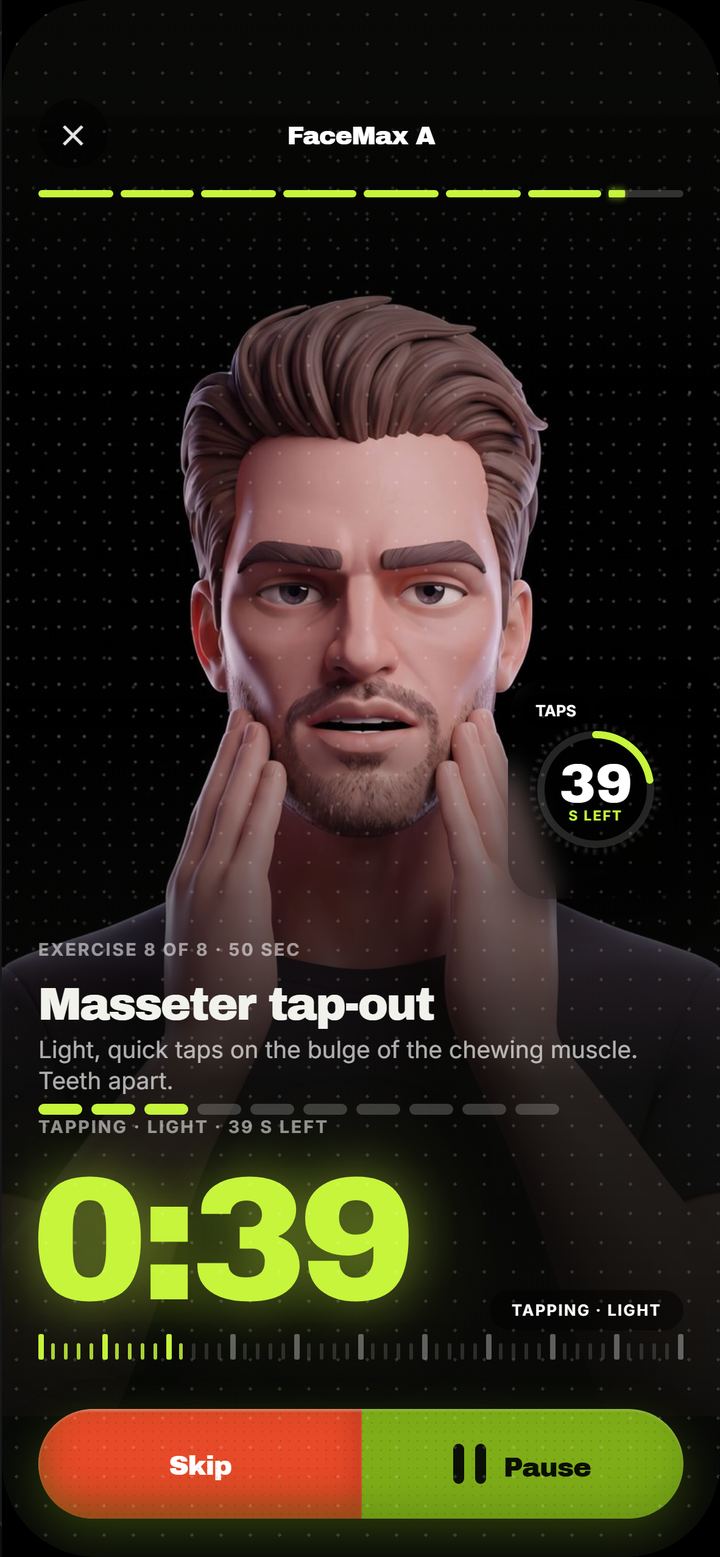
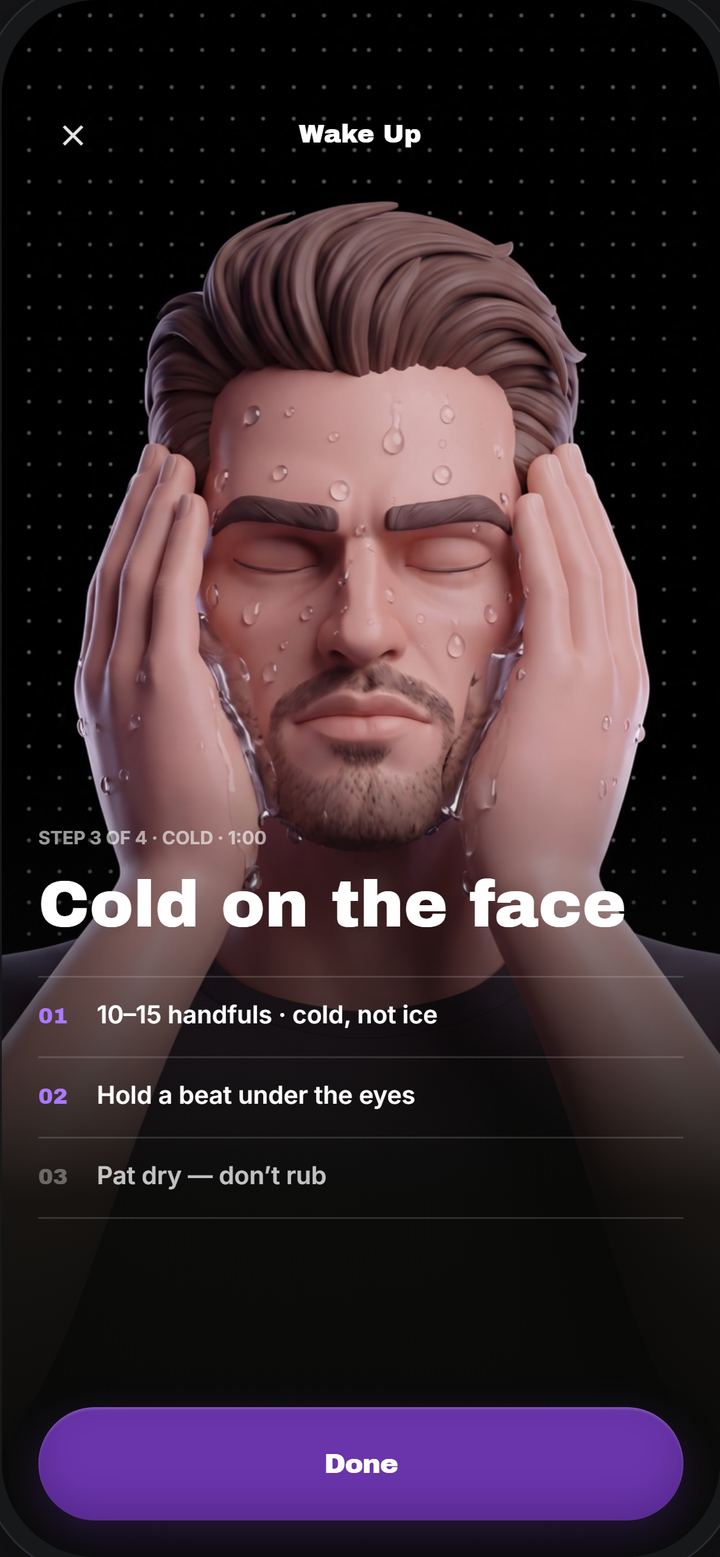
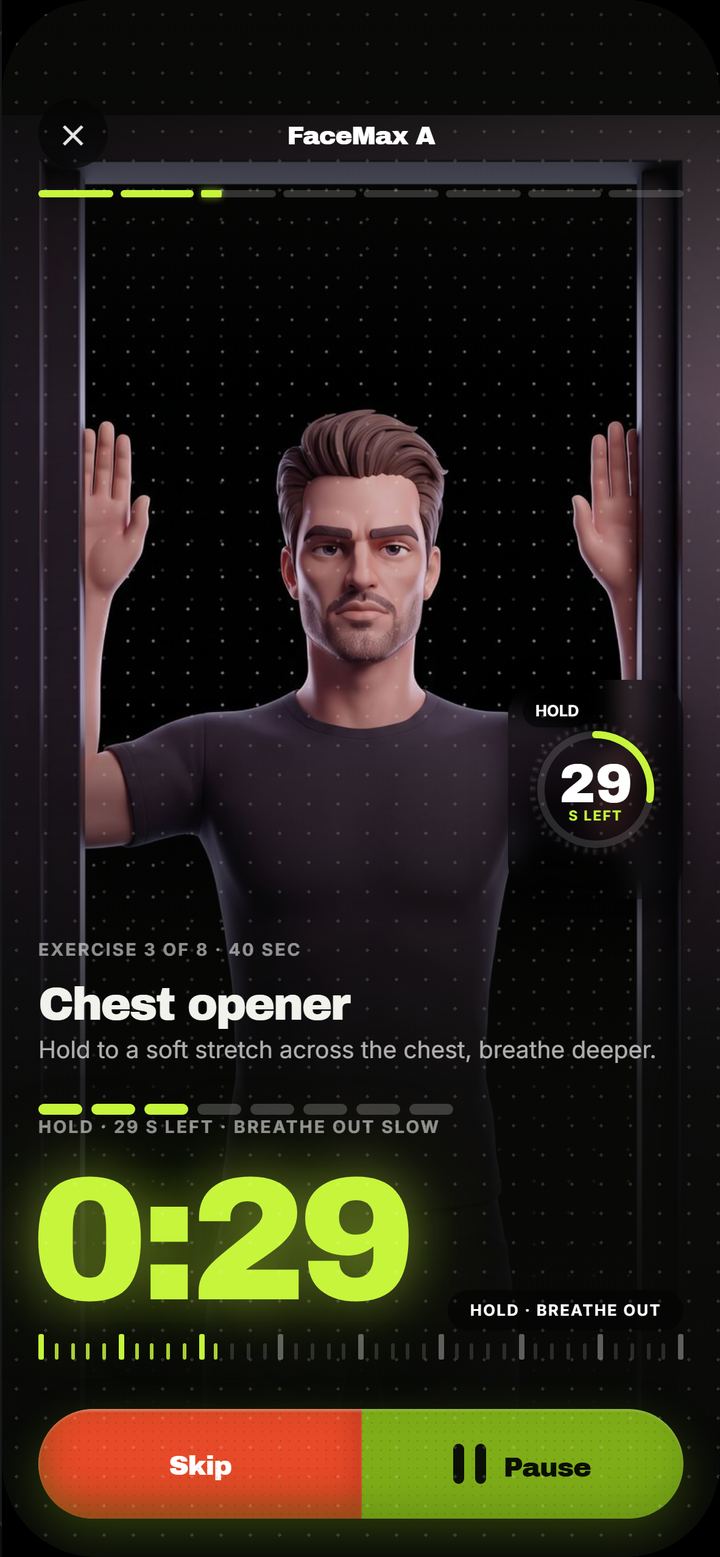
Get the app
Free tool · in your browser

Face symmetry test — free, online, nothing uploaded

A face symmetry test measures how closely the two halves of your face mirror each other. This one finds 478 landmarks in your photo, fits a midline down your face, folds one side onto the other and reports the gap as a number out of 100 — plus a number for your eyes, brows, nose, mouth and jaw. It all happens inside this tab: the photo is never uploaded, because the page has nowhere to send it.

Drop a front-facing photo or use the camera. Eyes open, no glasses, camera at eye level.

Loading the landmark model — a few megabytes, once per visit.

Measuring…

Processed on this device · no upload · nothing stored

What a face symmetry test measures from a photo

A face symmetry test measures distance, not beauty. The LOOKSMAXBRO tool takes the 478 landmarks the on-device model puts on your face, rotates the picture until your eyes are level so the tilt of the camera cannot count as asymmetry, and fits a midline through three points that sit on your center line by definition: the glabella between your brows, the tip of your nose and the point of your chin.

Then it folds. Every landmark on one side is reflected across that midline and the distance to its twin on the other side is measured — the corners and lids of both eyes, both brow lines, both nose wings, the outer lip border, and the jaw contour from the chin up to below the ear. Those distances are divided by the distance between your pupils, so the same face scores the same from two steps closer or further away.

The score is the average gap, restated on a 0–100 scale where 100 is a perfect mirror. Each region — eyes, brows, nose, mouth, jaw — is averaged on its own first and then counted once, so a sixteen-point eye contour cannot outvote two mouth corners. The overlay on your photo draws the midline and every pair that went into the number, so you can see exactly what was measured.

How to read your face symmetry score

Most faces land between 80 and 95, and a lower number is the photo as often as the face. Nobody is symmetric: two sides that grew from the same plan still differ by a few millimeters, and the difference is normal enough that it is the baseline, not the finding.

Three things in a photograph move this number without anything about your face changing:

  • The lens. A phone held close enlarges whatever is nearer to it. A few degrees of head turn then makes one cheek bigger than the other, and the tool reads the difference as asymmetry. Step back and zoom in instead.
  • The head turn. A small rotation is invisible to you and obvious to a midline. The tool refuses a photo that is turned too far and warns you on one that is turned a little — take the warning seriously before you take the number seriously.
  • The light. A window on one side deepens the shadow under one brow and one cheek, and the landmark model places points where it can see edges. Face a window straight on, or use flat indoor light.

Shoot the same photo twice, a minute apart, and compare. If the two numbers differ by more than a point or two, the photo is doing the talking. That is also why the app re-scans on a schedule instead of trusting a single morning.

What actually changes facial symmetry

Facial symmetry is mostly bone, and bone is not on the table here. What is on the table is everything sitting on top of it — fluid, muscle tone and the angle your head is carried at — graded by how much evidence stands behind each one, in the same words the LOOKSMAXBRO habit catalog uses.

  • Sleep strong Overnight fluid is the single biggest reason your two sides look different from one morning to the next, and it is the one thing on this list that moves within a day.
  • Posture and neck work moderate A head held forward and habitually turned to one side changes the angle every photo of you is taken at. FrameMax is the app’s version of this.
  • Morning lymphatic drainage weak A few minutes of light drainage moves the puffiness out sooner than waiting does. The effect is real, modest and gone by evening — Massage AM in the app.
  • Chewing on both sides A jaw worked on one side only builds one masseter more than the other over years. Evening it out is slow and unglamorous, and it is the honest version of “jaw exercises for symmetry”.
  • One-sided “symmetry exercises” Little evidence behind them. A muscle can be made fuller; the bone under it does not move, and a face that already looks even can be made to look worse by training one side harder.
  • Tongue posture (mewing) There is no evidence mewing changes bone or brings the two sides closer together. LOOKSMAXBRO keeps it as a free posture cue and promises nothing more.
  • Surgery, fillers, “bone smashing” out of scope LOOKSMAXBRO does not teach, plan or recommend any of these, and this tool is not a consultation. If asymmetry appeared suddenly or came with weakness or pain, that is a doctor’s question, not an app’s.

Grades are the app’s own evidence grades, from the habit catalog every lesson is built from. A row with no grade beside it is one the catalog grades nothing at all.

Questions

Is a free online face symmetry test accurate?

Is a face symmetry test accurate?

A face symmetry test is accurate about the photo you gave it, and only roughly accurate about your face. The LOOKSMAXBRO face symmetry test places landmarks to within about a pixel on a well-lit, straight-on shot, but a few degrees of head turn or a close-up lens can move the score by several points, which is why the tool levels the picture, refuses a photo turned too far from the camera, and asks you to shoot twice before believing a low number.

What is a good face symmetry score?

Most faces score between 80 and 95 on the LOOKSMAXBRO face symmetry test, so anything in that band is ordinary rather than good or bad. Above 95 is rare and usually says the photo was unusually clean; below 80 is worth a second photo in better light before it is worth any other conclusion. There is no ranking behind these numbers and no comparison with anyone else — the score is a distance measurement described in plain words.

Is my photo uploaded when I use this face symmetry test?

No — the LOOKSMAXBRO face symmetry test never uploads your photo, because the page it runs on has nowhere to send one. The landmark model is downloaded to your browser once and the measurement happens on your own device; the page’s content security policy blocks every outbound connection except to this site itself, so the promise is enforced by the browser rather than by a privacy paragraph. Close the tab and nothing is left behind.

Does face symmetry matter?

Face symmetry matters far less than the internet suggests: research finds a small preference for more symmetric faces, and every real face is asymmetric, including the ones held up as examples. The LOOKSMAXBRO face symmetry test reports a distance so you can see which region moves when your sleep, salt or posture changes — it is a tracking number, not a verdict, and it says nothing about attractiveness.

Can you improve face symmetry naturally?

You can improve the part of face symmetry that is fluid, muscle and posture, and not the part that is bone. Sleep, salt and alcohol move morning puffiness within a day (strong evidence), posture and neck work change the angle your face is seen at (moderate), morning lymphatic drainage helps a little and briefly (weak), and one-sided “symmetry exercises” carry no evidence grade at all. Nothing done at home moves the skeleton.

Why is my face asymmetrical in photos but not in the mirror?

Your face looks asymmetrical in photos because the mirror shows it flipped and a lens flattens it. You have spent your life memorizing the mirrored version, so the un-mirrored one reads as wrong even when nothing has changed, and a phone held at arm’s length enlarges whatever is closest to it. The LOOKSMAXBRO face symmetry test measures the same landmarks either way — a mirrored photo and the original give it the same score.

Does face symmetry change with age?

Face symmetry drifts slowly with age, mostly downward and mostly for reasons that have nothing to do with effort: soft tissue settles unevenly, chewing and sleeping habits favor one side, and old dental work or an injury leaves a mark. Tracking the LOOKSMAXBRO face symmetry score over months in the same light shows the drift; comparing two photos shot in different rooms shows the rooms.

One photo is a snapshot. Twelve weeks is a trend.

LOOKSMAXBRO re-scans your face on your phone every week — puffiness, jawline, skin and posture beside symmetry — and puts the habits that move them on your day plan.

QR code — opens the App Store on your iPhone
Scan to download Point your iPhone camera at the code. It opens the App Store.